Discover the science and spirituality behind sleep paralysis. Understand its causes, symbols, and meanings through Jung, Neville Goddard, and Bashar.
Sleep Paralysis: A Complete Guide to the Science, Symbolism, and Spiritual Interpretations Behind This Mysterious Experience
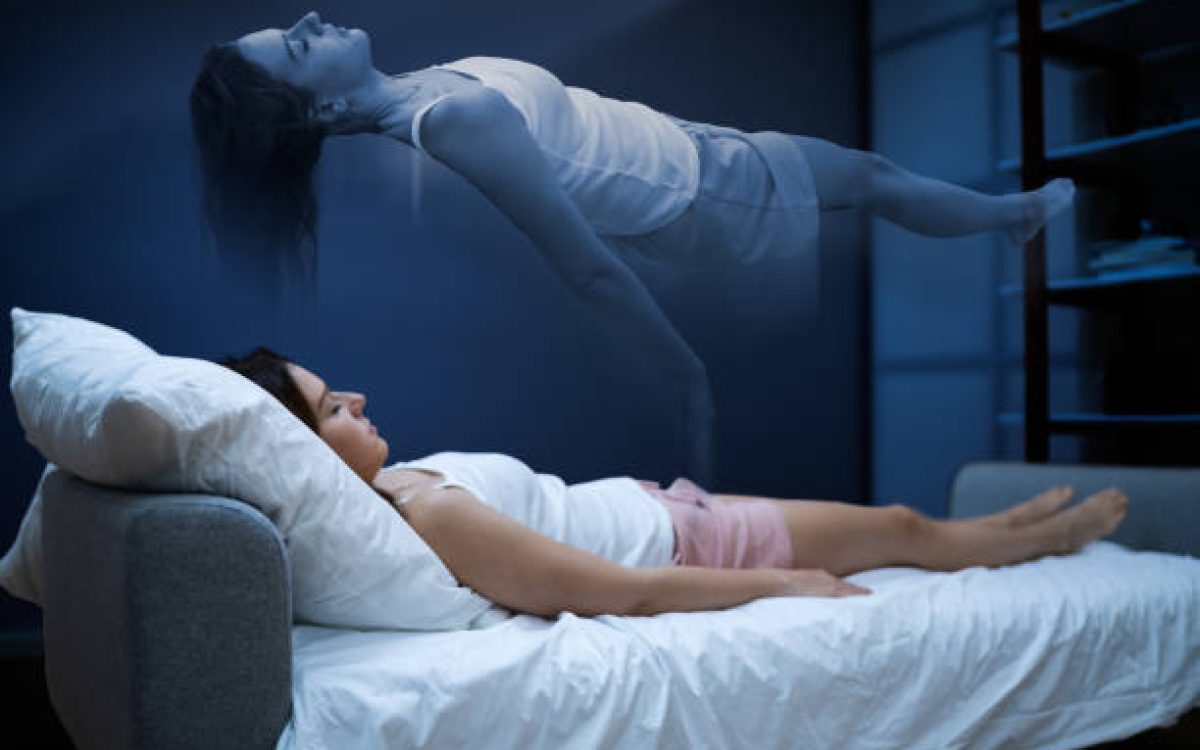
Sleep paralysis is one of the most intriguing—and misunderstood—human experiences. For some, it is a terrifying moment where the mind wakes up but the body does not follow, often accompanied by intense fear, strange sensations, or the impression of unseen presences. For others, it is a gateway to lucid dreaming, astral projection, or profound spiritual encounters.
But what actually happens during sleep paralysis?
Why do so many people report seeing entities, shadows, demons, or feeling a heavy weight on the chest?
And how do different frameworks—scientific, psychological, and spiritual—interpret the phenomenon?
This comprehensive article explores sleep paralysis from multiple angles:
Modern neuroscience
Carl Jung’s archetypes and the shadow psyche
Neville Goddard’s teachings on imagination and states of consciousness
Bashar’s metaphysical model of parallel realities and vibrational alignment
Cross-cultural spiritual meanings
Practical advice for interpreting the experience safely and constructively
This article avoids sensationalism and fear-based interpretations. Instead, it provides a balanced, grounded, and empowering understanding of the phenomenon.
1. What Is Sleep Paralysis? (Scientific Explanation)
Sleep paralysis occurs when a person becomes conscious during the transition between REM sleep and wakefulness while the body is still in a state of muscular atonia (temporary paralysis).
1.1 What Actually Happens in the Brain?
During REM sleep:
The brain is highly active
The body is immobilized to prevent acting out dreams
The amygdala (fear center) is more active
Sensory processing areas fire in irregular patterns
Sleep paralysis occurs when:
Conscious awareness returns
Body paralysis remains active
Dream imagery bleeds into waking perception
This combination can produce:
Visual hallucinations (shadows, figures)
Auditory hallucinations (whispers, footsteps)
Sensations of weight on the chest
“Presence hallucinations”
Breathing difficulty (caused by REM respiratory changes, not actual danger)
1.2 Common Causes
Sleep deprivation
Irregular sleep schedule
Stress or anxiety
Sleeping on the back
Jet lag
Narcolepsy
Use of stimulants or certain medications
From a medical perspective, sleep paralysis is not dangerous.
But it can be emotionally overwhelming—especially when interpreted spiritually.
2. Why Do People See Entities During Sleep Paralysis?
Across centuries and cultures, people have reported remarkably similar visions:
Dark silhouettes
Shadow beings
Visitors standing near the bed
Feeling watched
A “demonic” presence
An “old hag” sitting on the chest
Bright beings or non-human figures
Science explains this through 4 mechanisms:
Hyperactive amygdala — amplifies fear and threat detection
REM hallucinations — dream imagery enters wakefulness
Parietal dysfunction — distorts body and spatial awareness
Predictive processing errors — the brain fills sensory gaps with archetypal shapes
But why are these hallucinations so consistent across cultures?
Why do people not see random things—like chairs or flowers—but instead see entities?
For this, we turn to psychology and spirituality.
3. Carl Jung’s Interpretation: Shadow Archetypes and Unconscious Contents
Carl Jung viewed sleep paralysis–type visions as manifestations of the collective unconscious, particularly the Shadow archetype.
3.1 The Shadow
The Shadow contains:
Repressed fears
Disowned emotions
Unintegrated trauma
Unconscious instincts
When the rational ego is weakened (such as during REM sleep transitions), Shadow imagery can emerge symbolically.
This is why many sleep paralysis visions include:
Dark figures
Monsters
Threatening energies
Watchers or observers
3.2 Sleep Paralysis as a “Threshold State”
Jung emphasized moments when consciousness is suspended between worlds—dream and waking—are gateways to deep unconscious material.
Sleep paralysis fits this perfectly.
It is a moment of:
Ego dissolution
Heightened symbolic perception
Increased access to archetypal material
3.3 The “Demon” as Psychological Symbol
Within a Jungian framework, demons are not literal beings, but psychological projections expressing:
Fear
Internal conflict
Unintegrated childhood experiences
Suppressed desires
Collective energies
For Jung, the purpose is integration, not fear:
“What we resist persists.” — Carl Jung
Understanding the phenomenon reduces fear and transforms the experience.
4. Neville Goddard’s View: Imagination Creates States of Consciousness
Neville Goddard taught that states of consciousness create our internal and external experiences. Sleep paralysis is closely related to the borderline state between sleep and wakefulness, which he called:
The State Akin to Sleep (SATS)
The doorway to manifestation
The imaginal threshold
4.1 Sleep Paralysis as a Creative Portal
Neville would view sleep paralysis not as a threat, but as an opportunity because:
The body is asleep
The mind is awake
Imagination is powerful
Consciousness is responsive
This aligns with the idea that hallucinations are simply:
“Imaginal constructs appearing more vividly because the senses are shut down.”
4.2 Entities as Projections of States
According to Neville:
Every emotion is a state
Every state manifests identity
Symbolic forms appear according to the state you embody
Thus:
Fear → creates frightening images
Calmness → creates neutral or peaceful images
Desire → may create helpful or guiding apparitions
Neville would not view these entities as independent beings, but as:
Imagination externalized.
5. Bashar’s Perspective: Vibrational Alignment and Parallel Realities
Bashar (channeled by Darryl Anka) offers a metaphysical perspective radically different from science but consistent with many spiritual teachings.
5.1 Sleep Paralysis as a Shift Between Realities
Bashar describes sleep paralysis as:
“A moment where your consciousness is shifting between parallel states and you are temporarily aware of both.”
The body vibrates at one frequency (sleep state), while the mind vibrates at another (wake state). This mismatch creates:
Sensory distortions
Perception of non-physical beings
Energy sensations
Out-of-body potentials
5.2 Entities as Frequency Reflections
Instead of demons, Bashar suggests:
Entities match your vibrational state
Fear attracts fear-based reflections
Curiosity attracts neutral or positive reflections
He always emphasizes:
“You are never in danger. You are simply seeing a reflection of your vibration.”
This mirrors both Jung and Neville in different language.
6. Cultural and Spiritual Views on Sleep Paralysis
6.1 In many traditions, paralysis is a spiritual doorway
Shamanism: entry into the spirit world
African traditions: ancestor contact
Islamic cultures: jinn presence
Norse traditions: nightmares from “Mara”
Brazilian folklore: “Pisadeira”
Western occultism: astral projection gateway
Even though interpretations vary, the pattern is consistent:
Sleep paralysis is a liminal state with spiritual significance.
7. Why Sleep Paralysis Feels Like a Demon is Near
Three combined mechanisms explain the “demonic” impression:
7.1 Psychological
The brain’s fear circuitry fires intensely, leading to:
Hypervigilance
Sensory exaggeration
Threat-based hallucinations
7.2 Archetypal
The Shadow emerges as symbolic “dark figures.”
7.3 Cultural Conditioning
If someone grew up with religious or supernatural narratives about:
Hell
Demons
Evil spirits
Nighttime attacks
…the mind may default to those images under stress.
This does not make the experience “less real”—only differently interpretable.
8. Is Sleep Paralysis Dangerous?
Medically: No.
Spiritually: Depends on interpretation.
Psychologically: It can be distressing but not harmful.
Long-term sleep paralysis usually indicates:
Stress
Sleep imbalance
Anxiety
Unresolved emotional energy
Heightened sensitivity to dream states
Psychic sensitivity (according to spiritual interpretations)
9. How to Reinterpret Sleep Paralysis So It Isn’t Terrifying
9.1 Relax the Body
Fear intensifies hallucinations.
9.2 Shift to Observation Mode
Simply observe sensations and images.
9.3 Use Neville’s Approach
Imagine yourself moving freely or floating.
9.4 Use a Jungian Approach
Ask the entity:
“What do you represent?”
(This instantly dissolves fear.)
9.5 Use Bashar’s Approach
Say internally:
“I align with a higher vibration.”
10. Transforming Sleep Paralysis into a Positive Experience
Sleep paralysis can evolve into:
Lucid dreams
Astral projection
Out-of-body experiences
Deep spiritual encounters
Intuitive insights
Emotional releases
Many mystics intentionally train to reach this state.
11. Final Thoughts
Sleep paralysis sits at the crossroads of:
Science
Psychology
Mythology
Spirituality
Human consciousness
Whether understood through neuroscience, Jung, Neville, or Bashar, one truth remains:
It is not an attack — it is a doorway.
A doorway to the inner self.
A doorway to imagination.
A doorway to vibrational awareness.
A doorway to deeper consciousness.
By understanding sleep paralysis through multiple frameworks, we reduce fear and open the possibility for profound transformation.