Discover what sound is, how it works, how it’s produced, and how sound travels through different mediums. A complete beginner-friendly guide to sound, vibration, and waves. Perfect for students and curious minds.
How Sound Works: What It Is, How It’s Made, and How Sound Travels (Complete Beginner’s Guide)
Sound is something we experience every day — from music and conversation to traffic and nature. Yet most people don’t really understand what sound is, how it works, or how it moves through the world.
This guide breaks everything down in a clear, modern, and beginner-friendly way.
You’ll learn:
What sound really is
How sound is created
How sound travels
How sound waves behave
Why sound changes depending on the material around it
How vibration connects to energy and human perception
Let’s begin with the foundation.
1. What Is Sound? (Simple Definition)
In the simplest terms:
👉 Sound is a vibration that travels through a medium and can be heard when it reaches the ear.
More technically:
Sound begins with vibrations.
These vibrations disturb nearby particles (like air molecules).
Those disturbances move outward as waves.
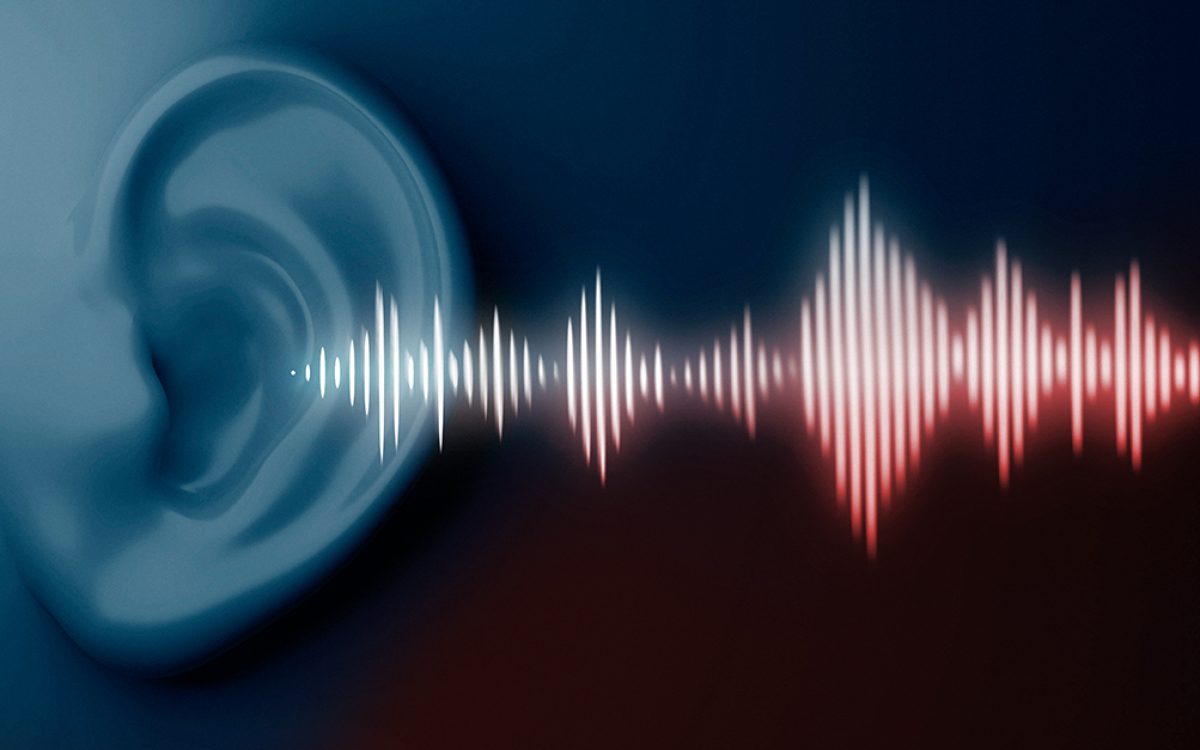
When these waves reach your eardrum, your brain interprets them as sound.
Sound requires a medium
Sound cannot travel in a vacuum (like outer space).
It needs:
air
water
metal
wood
gas
or any material with particles
The denser the material, the faster sound can move.
2. How Sound Is Created (The Science of Vibration)
Everything that produces sound vibrates:
guitar strings
vocal cords
speakers
tuning forks
engine parts
wind passing through objects
The 3-step process of sound creation
An object vibrates
The vibration moves back and forth extremely fast.Particles around it also vibrate
These particles collide with their neighbors — like a chain reaction.A sound wave moves outward
This wave continues until it runs out of energy or hits something.
Compression and rarefaction
Sound waves are longitudinal waves, made of:
compressions (particles squeezed together)
rarefactions (particles spread apart)
This continuous pattern creates the wave motion that carries the sound.
3. How Sound Travels (The Complete Breakdown)
When sound travels, it behaves like a ripple moving through water — except it moves through air molecules, not liquid.
The steps of sound traveling:
A sound source vibrates.
The air around it vibrates.
Vibrations pass from particle to particle.
The wave travels outward in all directions.
Your ear detects the wave.
Your brain converts it into meaning.
4. How Sound Travels Through Air
Air is the most common medium for sound.
Here’s how it works:
Air particles are always moving.
When a vibration happens, it pushes these particles.
Those particles collide with others.
The movement spreads outward as a wave.
Because air is not dense, sound travels moderately fast — about 343 m/s at room temperature.
Why temperature matters
Warm air → particles move faster → sound travels faster
Cold air → particles move slower → sound travels slower
This is why voices carry farther at night (cooler, denser air).
5. How Sound Travels Through Water and Solid Materials
Water
Sound travels 4 times faster in water than in air.
This is why whales communicate across entire oceans.
Solids
Sound travels 10 to 15 times faster in solids like steel.
Why?
Because the particles are very close together, allowing vibrations to pass quickly.
6. Why Sound Changes in Different Environments
Sound is affected by:
temperature
humidity
wind
material density
obstacles
open vs closed space
Examples:
Sound echoes in empty rooms.
Sound becomes muffled through walls.
Sound is louder in humid air.
Clothing and soft objects absorb vibrations.
7. Frequency, Pitch, and Why Sounds Feel Different
Frequency = how fast an object vibrates
Measured in Hertz (Hz)
High frequency → high pitch
Low frequency → low pitch
Examples:
A baby crying: high pitch
Thunder: low pitch
Humans normally hear from 20 Hz to 20,000 Hz.
8. Amplitude, Volume, and Why Sounds Can Feel “Powerful”
Amplitude = size of the vibration
This determines how loud a sound is.
Big waves = loud
Small waves = quiet
Measured in decibels (dB).
Examples:
Whisper ≈ 30 dB
Conversation ≈ 60 dB
Traffic ≈ 80 dB
Concert ≈ 110 dB
Jets ≈ 140 dB (pain level)
9. The Human Ear: How We Convert Vibrations Into Meaning
The ear is one of the most advanced biological systems on Earth.
The process:
Sound waves enter the ear canal.
The eardrum vibrates.
Small bones (ossicles) amplify the vibration.
Vibrations reach the cochlea (fluid inside).
Tiny hair cells detect frequency and amplitude.
Electrical signals go to the brain.
The brain interprets the signal.
In other words:
👉 Your brain is not hearing sound — it is decoding vibrations.
10. How Sound Connects to Energy, Emotion, and Human Experience
Here é o ponto onde você puxa o público para seu nicho espiritual sem perder a base científica.
Sound does not only exist physically — it also influences:
mood
focus
memory
emotional state
sense of safety
energy levels
brainwaves
Different frequencies can:
calm the nervous system
increase concentration
trigger emotional release
create feelings of harmony
This is the foundation of:
sound therapy
frequency healing
mantras
chanting
singing bowls
binaural beats
Even without spiritual explanation, it’s scientifically proven that:
👉 Vibration affects the human nervous system directly.
This is why sound is used in meditation, healing, therapy, and deep relaxation practices around the world.
11. Summary — Everything We Covered
Sound is vibration.
It needs a medium to travel.
It moves as waves (compression + rarefaction).
It travels differently through air, water, and solids.
Frequency = pitch.
Amplitude = volume.
The ear transforms vibration into meaning.
Sound influences energy, mood, and consciousness.