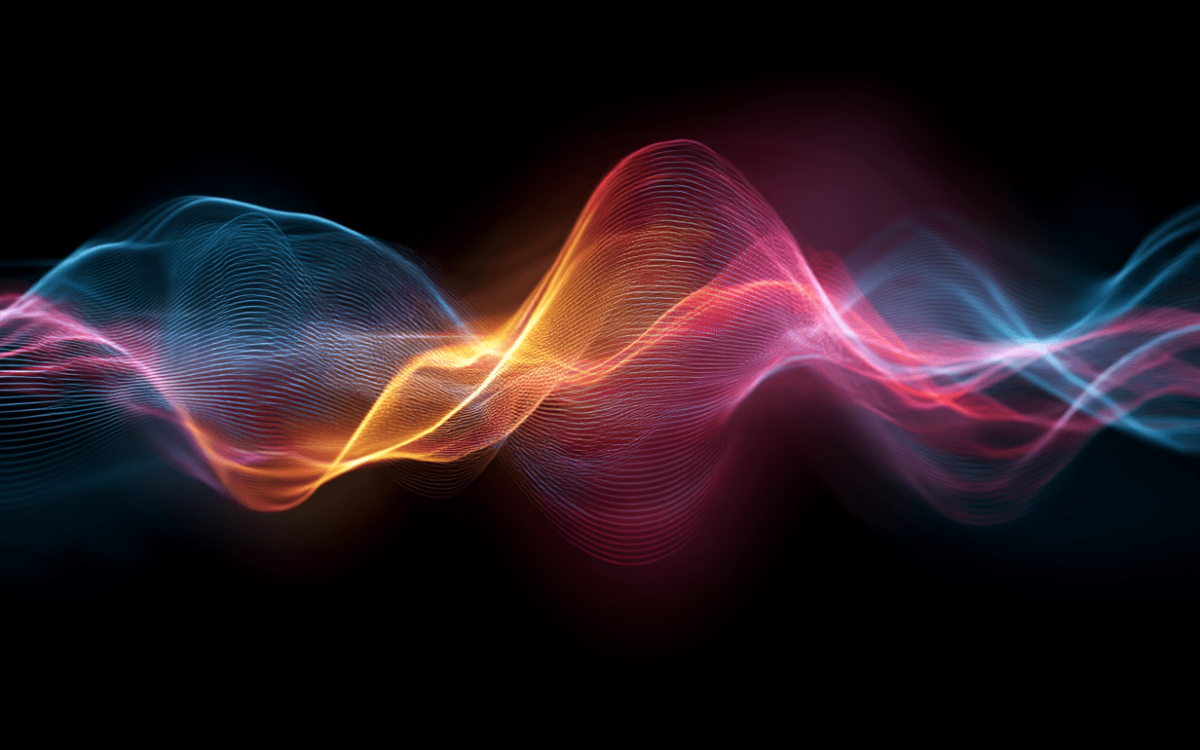
Learn how sound waves travel through the air and other mediums, what makes them vibrate, and why understanding wave physics helps explain music, meditation, healing frequencies, and the energetic nature of the universe.
How Sound Waves Travel: The Science of Vibration and the Hidden Dynamics of Energy
Sound is everywhere.
It shapes communication, influences emotions, and creates meaning in our daily experiences. But beyond what our ears perceive, sound is a physical phenomenon governed by the laws of vibration and energy. Understanding how sound waves travel not only clarifies how we hear the world but also opens the door to a deeper discussion: everything in the universe vibrates — including us.
This article explores how sound waves move, why they behave the way they do, and how this knowledge connects to broader concepts of vibration and energy used in meditation, healing practices, and spiritual traditions.
Prepare for a journey combining solid physics with subtle energetic insights, written in a friendly, scientific, and accessible tone.
1. What Is a Sound Wave? The True Nature of Vibration
A sound wave is a disturbance of energy that propagates through a medium — such as air, water, or solid materials. What moves through the medium is energy, not matter.
Many people imagine sound as a “thing” traveling from point A to B. But scientifically, sound is better understood as:
A vibration
A pattern
A sequence of pressure changes
These alternating pressure changes form what we call:
compressions (air molecules packed together)
rarefactions (air molecules spread apart)
This repeating cycle creates the wave.
Longitudinal Wave Structure
Sound waves in air are longitudinal, meaning particles vibrate parallel to the wave’s direction of travel.
Imagine a slinky being pushed and pulled along its length — that is how sound behaves.
This longitudinal movement is essential to differentiate sound waves from transverse waves like light, where particles move perpendicular to the direction of travel.
2. Key Components of a Sound Wave
To understand how sound travels, we must break down its fundamental components.
2.1 Frequency (Hz)
Frequency measures how many vibrations occur per second.
Low frequency → deep, bass sounds
High frequency → sharp, treble sounds
Humans typically hear between 20 Hz and 20,000 Hz.
But here is where things get interesting:
infrasound (<20 Hz) and ultrasound (>20,000 Hz) both travel through the world even if we cannot hear them.
These frequencies influence:
animal communication
seismic activity
medical imaging
energetic fields
Frequency is also a key concept in spiritual practices involving sound healing, mantras, or tuning forks — all based on vibrational resonance.
2.2 Amplitude
Amplitude reflects the strength or power of a wave.
Higher amplitude → louder sound
Lower amplitude → softer sound
Amplitude does not affect pitch, only loudness.
2.3 Wavelength
Wavelength is the distance between two consecutive compressions or rarefactions.
Long wavelength → deep sound
Short wavelength → sharp sound
Wavelength determines how sound spreads, bends around obstacles, and fills space.
2.4 Waveform and Timbre
Waveform refers to the shape of the vibration.
This shape determines the quality of a sound — why a violin sounds different from a flute playing the same note.
The complexity of waveforms influences emotional and energetic responses to sound.
It also forms the basis of sound therapy, where pure tones are used to create specific states of mind.
3. How Sound Waves Travel Through Different Mediums
While other articles explained the basics of air propagation, here we go deeper into the wave physics behind sound movement.
Sound waves require a medium because they depend on molecular vibration.
Let’s explore how the medium affects their travel.
3.1 Travel Through Air: Vibration in Gases
In gases, molecules are far apart, so vibrations move slower.
The wave pushes one molecule, which pushes the next, creating a chain reaction.
This movement explains:
why thunderstorms sound delayed after you see lightning
why sound loses intensity over long distances
how acoustic design shapes theaters and meditation rooms
3.2 Travel Through Liquids: Dense Molecular Structure
Sound moves faster in water because molecules are closer.
This is why:
whales communicate across oceans
underwater meditation bowls resonate differently
divers hear distorted yet intensified sounds
Water is an excellent carrier of sound, which connects with many spiritual traditions that associate water with emotional sensitivity and vibrational fluidity.
3.3 Travel Through Solids: Maximum Efficiency
Sound travels the fastest through solids.
For example:
placing your ear on a table helps detect faint vibrations
a train can be heard through rails before it is audible through air
crystals and minerals resonate efficiently with frequencies (basis of crystal sound healing)
Solids are perfect carriers due to their tightly packed molecules.
4. The Physics of Wave Propagation
Here we expand on how sound waves actually move at a deeper level.
4.1 Compression and Rarefaction Cycles
When a vibrating object moves forward, it compresses molecules.
When it moves backward, molecules expand.
This creates a cycle:
compression → rarefaction → compression → rarefaction
This cycle travels outward as a wave — similar to ripples spreading on a pond.
4.2 Energy Transfers, Not Matter
A crucial concept:
Waves move energy
The medium’s particles only oscillate in place
This is true for sound, ocean waves, and even brain waves.
4.3 Intensity Drop with Distance (The Inverse Square Law)
As sound spreads outward, amplitude decreases.
This happens because the energy disperses across a larger area.
This principle explains:
why chanting feels stronger in small temples
why headphones deliver more intimate experiences
why meditation gongs resonate intensely up close
5. Resonance: The Hidden Key Behind Sound, Emotion, and Spirituality
Resonance occurs when an object vibrates at the same natural frequency as a wave.
When resonance happens:
amplitude increases
energy becomes more efficient
vibrations synchronize
Examples:
a tuning fork making another fork vibrate
a singer breaking glass by matching its resonance
music shifting your emotional state instantly
binaural beats entraining brainwave frequencies
This is the foundation of many energy-healing practices, where practitioners use sound to align, harmonize, or “retune” the body’s energetic field.
6. Interference and Wave Patterns
When two sound waves meet, they interact.
Constructive interference
Waves combine → louder sound
Destructive interference
Waves cancel → silence or reduced volume
Understanding interference deepens knowledge of:
noise-canceling headphones
architectural acoustics
meditation soundscapes
chanting in groups (why it feels powerful)
7. Sound Waves Beyond Hearing: Ultrasound, Infrasound, and Energetic Phenomena
7.1 Infrasound (<20 Hz)
Infrasound can travel extremely far.
It is produced by:
volcanoes
ocean waves
storms
certain meditation instruments (large Tibetan bowls)
Infrasound influences the body at a subconscious vibrational level, which explains why some sounds evoke deep calm or deep tension.
7.2 Ultrasound (>20,000 Hz)
Ultrasound is used in:
medical imaging
sterilization
sonar
cleansing crystals (popular in metaphysical practices)
Ultrasonic waves can shape matter through precise vibrational manipulation.
8. The Spiritual Meaning of Sound Waves: Everything Is Vibration
Once we understand that sound is vibration, we can see how this connects with ancient spiritual teachings.
Many traditions claim:
“Everything in the universe vibrates.”
From a scientific viewpoint, this is true:
atoms vibrate
molecules vibrate
stars vibrate
the earth vibrates
sound waves are vibration
This bridge between science and spirituality allows for a modern, credible understanding of:
mantras
sound baths
healing frequencies
tuning forks
solfeggio scales
432 Hz music
meditation gongs
These practices use vibration intentionally to influence the mind, body, and emotional states — much like physical sound waves influence their medium.
9. Practical Applications: From Meditation Rooms to Everyday Life
Understanding how sound waves travel improves:
Meditation & Healing Spaces
optimizing acoustics
enhancing resonance
choosing correct instruments
Music & Creative Expression
selecting frequencies for emotional impact
designing ambient soundscapes
Spiritual Practices
understanding vibrational philosophy
using sound tools with purpose
Home & Mental Well-Being
reducing noise pollution
designing quiet, peaceful environments
10. Final Thoughts: Sound as Energy, Science, and Conscious Experience
Understanding how sound waves travel reveals something profound:
sound is physics
sound is energy
sound is vibration
sound influences consciousness
By studying the science of sound, we also open space to explore how vibration affects our inner world — emotions, focus, peace, intuition, or spiritual connection.
This dual perspective is what makes sound one of the most fascinating forces in the universe:
a bridge between physical reality and human experience