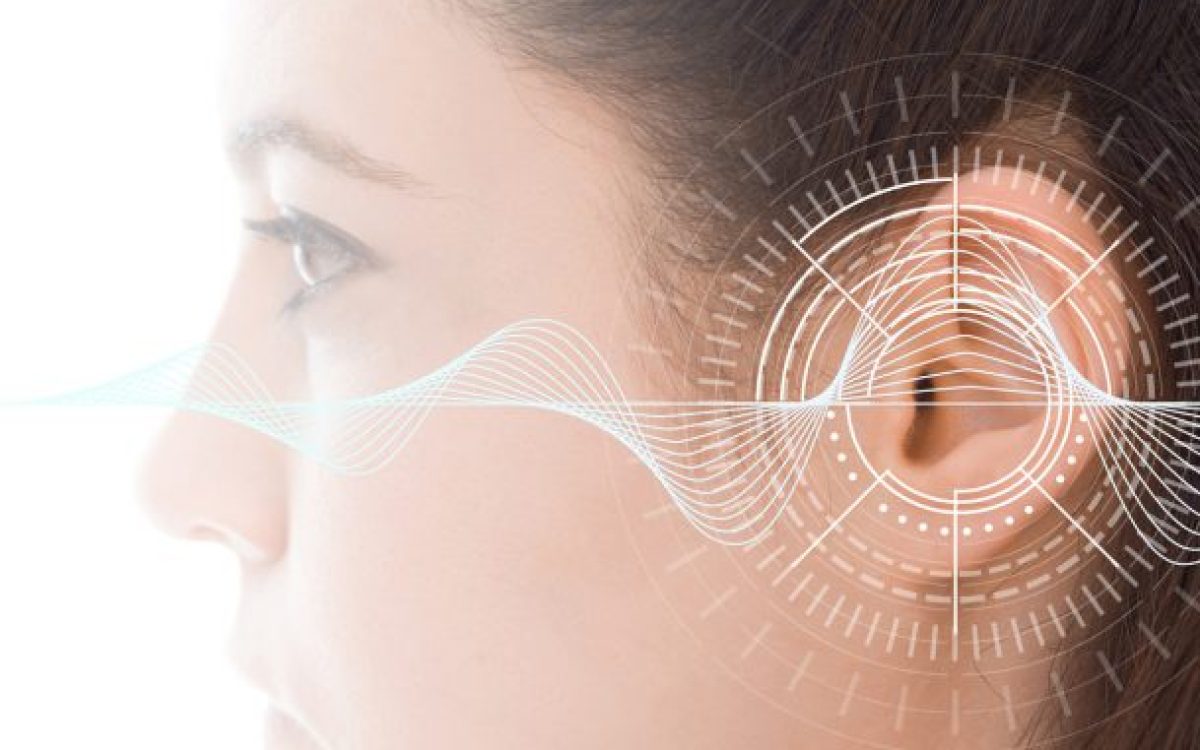
Learn how sound travels through air, water, and solids, how vibration becomes hearing, and why understanding wave motion reveals deeper insights into energy, frequency, meditation, and the human experience.
How Sound Travels: A Full Guide to Wave Motion, Physics, and Human Perception
Sound surrounds us every moment of the day — from the subtle hum of electronics to the rhythm of human speech. But understanding how sound travels requires going deeper into wave physics, molecular vibration, and the way our ears decode pressure changes into meaning.
This article builds a bridge between hard science and human experience, exploring not only the physical mechanics behind sound propagation but also the energetic and emotional dimensions connected to vibration. Written for students, curious minds, and spiritual seekers alike, this full guide helps you see sound as both a mechanical and energetic force.
1. What Exactly Is Sound?
Sound is a mechanical wave — a disturbance that moves through a medium by causing molecules to vibrate.
It is not a physical object traveling through space.
It is not a flow of matter.
It is the transfer of energy from one particle to the next.
To exist, sound requires:
a vibrating source
a medium (air, water, solid)
a receiver (ears or sensors)
Without a medium, there is no sound — which is why space is silent.
2. The Origin of Sound: Vibration Creates Waves
Every sound begins with vibration.
A guitar string vibrates.
A vocal cord vibrates.
A speaker cone vibrates.
These movements cause surrounding particles to first compress, then spread apart. This repeating pattern forms a wave made of:
compressions (high pressure)
rarefactions (low pressure)
This wave travels outward as a longitudinal wave — meaning particles vibrate parallel to the direction of movement.
This is fundamentally different from light or electromagnetic waves, which operate without a medium.
3. Essential Components of Sound Waves
Understanding sound travel requires understanding its key features:
3.1 Frequency
Measured in Hertz (Hz).
Determines pitch.
Higher frequency = higher pitch.
Humans hear approximately 20 Hz to 20,000 Hz, but animals go far beyond this range.
3.2 Amplitude
Determines loudness.
Higher amplitude = louder sound.
3.3 Wavelength
The physical distance between wave cycles.
Long waves = deeper tones.
Short waves = sharper tones.
3.4 Speed
The speed of sound depends on the medium (air, water, solid).
It also depends on temperature.
We’ll explore this more later.
3.5 Timbre
Timbre is the “color” of a sound — why different instruments sound unique even when playing the same note.
Understanding timbre helps explain why some tones feel calming, and others feel stimulating.
4. How Sound Travels Through Air
Air is the most common medium for sound in daily life.
Because air particles are far apart, sound moves slower and loses energy as it travels.
Speed of Sound in Air
At room temperature: approx. 343 m/s (1,125 ft/s).
How waves move in air:
A vibrating object compresses air molecules.
Those molecules push the next group of molecules.
Energy spreads outward in all directions.
The wave expands like ripples in water — but in 3D.
Factors that affect sound travel in air:
temperature
humidity
altitude
wind direction
This explains everyday experiences like:
hearing better at night
distant noises sounding clearer in rain
why whispers can travel far in caves
5. How Sound Travels Through Water
Water molecules are closer together than air molecules, so sound energy transfers more efficiently.
Speed of Sound in Water:
Approx. 1,480 m/s — more than 4× faster than in air.
Why sound travels better in water:
denser medium
stronger molecular bonds
less energy lost to the environment
This allows whales to communicate across vast oceans, sending low-frequency signals that travel thousands of miles.
In meditation and spiritual traditions, water is often associated with emotion and fluidity — interestingly, it is also the most effective carrier of vibrational energy in the natural world.
6. How Sound Travels Through Solids
Solids have tightly packed molecules, so vibrations move extremely fast.
Speed of Sound in Solids:
Can exceed 5,000 m/s, depending on the material.
This is why:
you can hear a train through the tracks before hearing it in the air
knocking on a wall produces a strong, clear sound
crystals and metals resonate intensely
Many spiritual and metaphysical practices use the strong vibrational properties of solids — especially crystals, metals, and sacred objects — to create resonance during rituals or meditation.
7. Why Sound Travel Changes Based on the Medium
To understand this, think about molecular spacing.
| Medium | Particle Spacing | Sound Speed | Energy Loss |
|---|---|---|---|
| Gas (air) | Very spread apart | Slow | High |
| Liquid (water) | Close | Fast | Low |
| Solid (metal/stone) | Very close | Very fast | Very low |
Sound is a chain reaction.
When particles are close together → they pass the vibration faster.
8. The Role of Temperature in Sound Travel
Temperature directly affects molecular speed.
Warm air → molecules move faster → sound travels faster
Cold air → molecules slow down → sound slows
This is why:
musicians tune differently in cold environments
outdoor sound travels differently from indoor sound
sound travels farther at night when air near the ground cools
9. How Humans Perceive Sound
Sound only becomes “sound” when your brain interprets the wave.
Step-by-step process of hearing:
Sound waves enter the ear canal.
They strike the eardrum.
The eardrum vibrates three tiny bones in the middle ear.
These bones amplify vibration and carry it to the cochlea.
Thousands of tiny hair cells convert the vibration to electrical signals.
The auditory nerve sends these signals to the brain.
Your brain then decides:
what the sound means
where it came from
whether it is threatening
whether it is pleasant
how to emotionally react
Sound is both physical and neurological.
This duality is why certain frequencies influence:
relaxation
focus
anxiety
creativity
sleep quality
10. Sound Propagation and Energy Laws
As sound travels, physical principles come into play:
10.1 Inverse Square Law
As distance doubles, intensity decreases to one-fourth.
This explains:
why whispered mantras feel intimate
why ocean waves sound softer from far away
why spiritual gongs feel powerful up close
10.2 Absorption
Materials absorb sound differently:
Soft materials (fabric, foam) absorb vibration
Hard materials (stone, wood) reflect vibration
10.3 Reflection
Sound reflects off surfaces, creating:
echoes
reverberation
acoustic color
This principle shapes architecture for temples, meditation halls, and sacred spaces.
11. Resonance: The Heart of Sound and Spirituality
Resonance occurs when an object vibrates at a frequency that matches another object’s natural frequency.
When resonance happens:
vibrations amplify
energy flows more freely
sound becomes more powerful
Examples:
a tuning fork causing another to vibrate
chanting in groups feeling physically powerful
crystal bowls generating deep emotional responses
Resonance is central to:
sound healing
mantra repetition
meditation gongs
solfeggio frequencies
vibrational therapy
Science and spirituality meet here.
12. Low Frequencies vs. High Frequencies: Behavior and Impact
Low frequencies:
travel farther
pass through obstacles
create physical sensations
High frequencies:
travel shorter distances
scatter easily
carry detailed information (speech, birdsong)
This is why:
thunderstorms rumble across miles
bass vibrates through walls
high-pitched sounds fade quickly
13. Interference: When Waves Meet
When sound waves interact, two things can happen:
Constructive Interference
Waves combine → louder sound
Destructive Interference
Waves cancel → silence or reduced sound
This is the principle behind:
noise-canceling headphones
soundproofing
meditation soundscapes
14. Infrasound and Ultrasound: Sounds Beyond Human Hearing
Infrasound (< 20 Hz)
Extremely low frequencies produce:
deep vibrations
emotional responses
physical sensations
Produced by:
volcanoes
storms
ocean waves
large meditation gongs
Ultrasound (> 20,000 Hz)
Used for:
medical imaging
cleaning crystals
animal communication
Ultrasonic vibration has powerful energetic effects on water and matter.
15. The Energetic Dimension: Sound as Vibration and Consciousness
While physics explains how sound travels, spiritual traditions explain why it affects us so deeply.
Many ancient systems taught:
“The universe is vibration.”
Science agrees:
atoms vibrate
molecules vibrate
the earth vibrates
our bodies vibrate
Sound is a bridge between physical and nonphysical experience.
Used intentionally, sound can:
relax the nervous system
shift emotional states
deepen meditation
enhance focus
balance breathing
support energetic healing
Whether through drums, chanting, instruments, or sacred frequencies, sound influences consciousness.
16. Practical Daily Applications
Understanding how sound travels helps improve:
Meditation & Spiritual Practice
using bowls, bells, and gongs
choosing ideal acoustic environments
Home Comfort
noise control
soundproofing
peaceful spaces
Communication
clearer speaking
better voice projection
improved listening
Wellness
sound therapy
vibrational healing
breath-sound alignment
17. Final Thoughts: Sound as a Bridge Between Science and Experience
Sound is more than vibration.
It is:
energy
communication
emotion
connection
consciousness
By understanding how sound travels, we also understand why it impacts our inner world so profoundly. The physics of sound and the human experience of vibration are two sides of the same truth: we live in a universe of waves, frequencies, and resonance.