Learn how sound is measured, what decibels and frequency really mean, how noise levels affect health, and how sound measurement connects science, acoustics, and human perception. A complete beginner-friendly guide.
How Is Sound Measured? A Complete Guide to Decibels, Frequency & Human Perception
Sound is part of our everyday lives — from conversations and music to traffic and nature. But have you ever wondered how sound is actually measured? What does “60 dB” mean? Why is a whisper 30 dB and a rock concert 110 dB? How do we measure noise pollution or determine whether a sound is safe?
This complete guide explains everything about sound measurement, from decibels to frequency, loudness, amplitude, and how humans perceive sound. You’ll explore the science, practical applications, and even how sound measurement influences mental and emotional well-being.
This article is designed for beginners and uses clear, friendly language — while also providing accurate scientific insights and excellent SEO optimization.
1. What Does It Mean to Measure Sound?
Sound measurement tells us how intense, how loud, and what frequency a sound has. While sound is physically a vibration traveling through a medium (air, water, solids), measurement lets us quantify:
Volume (how loud something is)
Frequency (how high or low a sound is)
Duration (how long the sound lasts)
Pressure changes created by the sound wave
Essentially, measuring sound means turning invisible vibrations into numerical data that humans can understand and compare.
2. The Main Units Used to Measure Sound
2.1 Decibels (dB) — Measuring Loudness
The decibel (dB) is the most common sound unit.
It measures sound pressure level (SPL) — how strong or loud a sound wave is.
But the dB scale is logarithmic, not linear.
🔍 What does that mean?
A 10 dB increase = sound is 10 times stronger
A 20 dB increase = sound is 100 times stronger
A 30 dB increase = sound is 1,000 times stronger
So going from 50 dB to 60 dB is not a small jump — it is 10 times more intense.
Common dB Levels:
| Sound Source | Approx. dB |
|---|---|
| Breathing | 10 dB |
| Whisper | 30 dB |
| Normal conversation | 60 dB |
| Vacuum cleaner | 70 dB |
| Busy traffic | 85 dB |
| Rock concert | 110 dB |
| Jet engine (close) | 140 dB |
Above 120 dB, most people experience pain or damage.
2.2 Hertz (Hz) — Measuring Frequency
Frequency tells us how fast a sound wave vibrates.
Low frequency = deep, bass sounds
High frequency = sharp, high-pitched sounds
Humans generally hear between:
20 Hz – 20,000 Hz
Dogs, whales and bats hear way beyond that.
2.3 Amplitude — The Strength of a Sound Wave
Amplitude measures the size or height of the sound wave, determining how powerful it is.
Higher amplitude = louder sound.
Amplitude is measured in:
Pascals (Pa)
Sound pressure (µPa)
But since these units are tiny and complex, the decibel scale is used instead.
3. How Do Sound Level Meters Work?
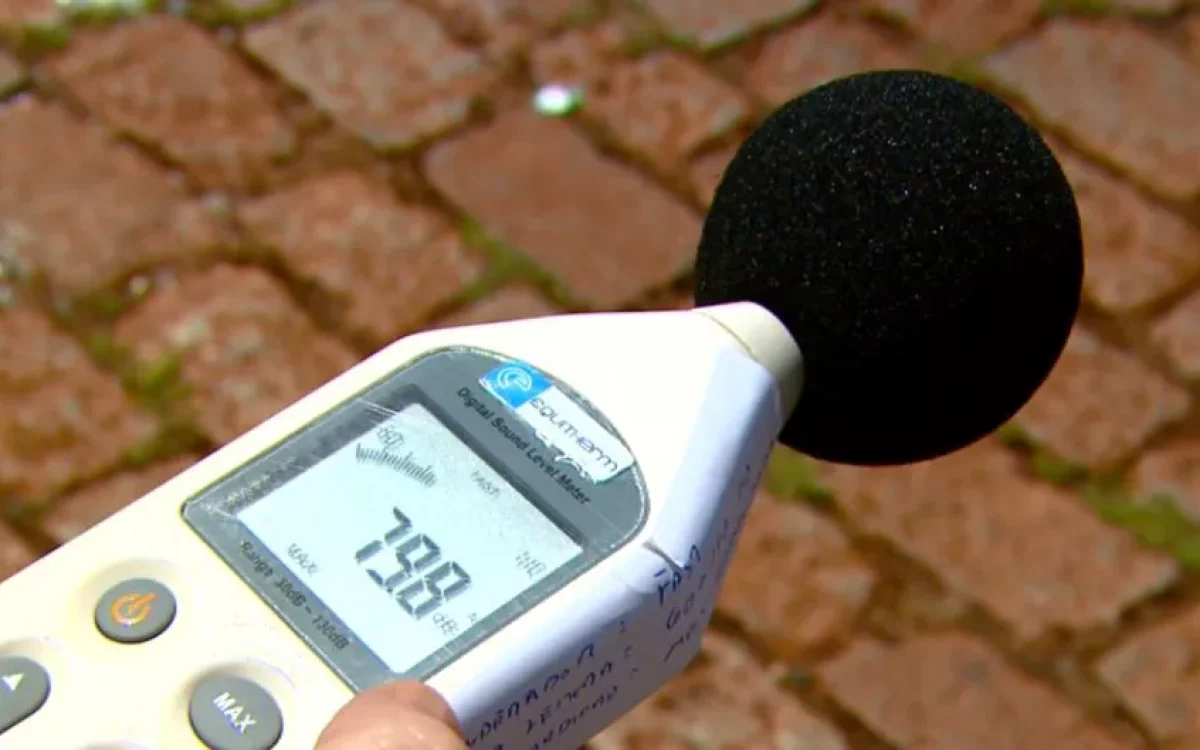
A sound level meter or decibel meter is the standard tool used to measure sound.
It usually contains:
Microphone – captures sound pressure changes
Amplifier – boosts the signal
Frequency weighting system – adjusts readings for human hearing
Display – shows results in decibels
The microphone converts air pressure variations into electrical signals, which the meter calculates into dB values.
🎧 Why weighting filters matter
Most measurements use A-weighting (dBA) because it reflects the frequencies humans hear best.
4. Types of Sound Measurements
4.1 Instantaneous Sound Level
A measurement taken at a single moment (e.g., the loudest point of a siren).
4.2 Average Sound Level (Leq)
Represents the average sound level over a period of time — very common in environmental noise studies.
4.3 Peak Level (dB Peak)
Measures the highest possible pressure level, usually used in explosions, fireworks, machinery, or gunshots.
4.4 Frequency Analysis (FFT or Spectrum)
Shows which frequencies are present in the sound — useful for:
Audio engineering
Noise identification
Acoustical treatment
Mechanical diagnostics
5. How Sound Is Measured in Different Environments
5.1 Measuring Environmental Noise
Governments often regulate noise for:
Airports
Urban areas
Residential zones
Industrial locations
Typical limit examples:
Residential zones: 50–60 dBA at night
Industrial areas: 70–85 dBA
5.2 Measuring Sound Indoors
Used in:
Recording studios
Home theaters
Acoustic treatment projects
Schools and offices
Tools help measure:
Reverberation time (RT60)
Background noise (dBA)
Echo problems
5.3 Measuring Sound in the Human Body (Phonation)
Sound produced by humans — talking, singing — is also measurable.
Vocal measurements include:
Vocal intensity
Pitch range
Harmonics and resonance
Breathiness and airflow
6. How Our Ears Perceive Sound — The Psychoacoustic Side
Sound measurement is one thing.
But how we perceive sound is completely different.
This field is called psychoacoustics and studies how humans interpret vibration.
Key facts:
The ear is more sensitive to mid-frequencies (1,000–4,000 Hz)
Low frequencies feel louder because they vibrate the body
Sharp sounds seem louder even at lower dB
Emotional responses influence loudness perception
7. Sound Measurement & Human Health
Measuring sound is essential because noise affects physical and mental health.
Safe exposure limits (OSHA):
85 dBA for 8 hours
Each +3 dB halves safe exposure time
Noise can cause:
Hearing loss
Tinnitus
Increased stress
Sleep disturbances
Reduced concentration
Anxiety
Measurements help prevent damage before it happens.
8. Sound Measurement in Spirituality & Energy Work
Although sound measurement is a scientific process, sound itself has deep spiritual significance in many traditions.
How sound links science with spirituality:
Certain frequencies promote relaxation
Binaural beats influence brainwave states
Drumming produces grounding, rhythmic resonance
Mantras use repeated frequency patterns
Tibetan bowls vibrate at specific harmonic intervals
In essence:
Science measures the vibration — spirituality interprets the meaning behind it.
9. Tools Used by Professionals to Measure Sound
Common instruments:
Sound Level Meters (SLMs)
Dosimeters
Spectrum analyzers
Smartphone apps (less accurate but useful)
Real-time analyzers (RTAs)
Important capabilities include:
Weighting filters (A, C, Z)
Frequency spectrum display
Peak detection
Average (Leq) measurement
Data logging
10. Why Understanding Sound Measurement Matters
Sound measurement is essential in:
Health & safety
Construction
Urban planning
Audio engineering
Spiritual sound healing
Music production
Architecture
Education
Whether you’re testing a quiet meditation room or tuning a concert hall, knowing how to measure sound improves the experience and ensures safety.
Conclusion
Sound measurement is the bridge between the physical world of vibrations and the human experience of hearing, emotion, and perception. By understanding decibels, frequency, amplitude, and how we measure sound, we gain more control over the sounds that shape our lives — both externally and internally.
From protecting our ears to designing better rooms, and from creating healing sound frequencies to improving audio systems, sound measurement empowers us to use vibration with intention.