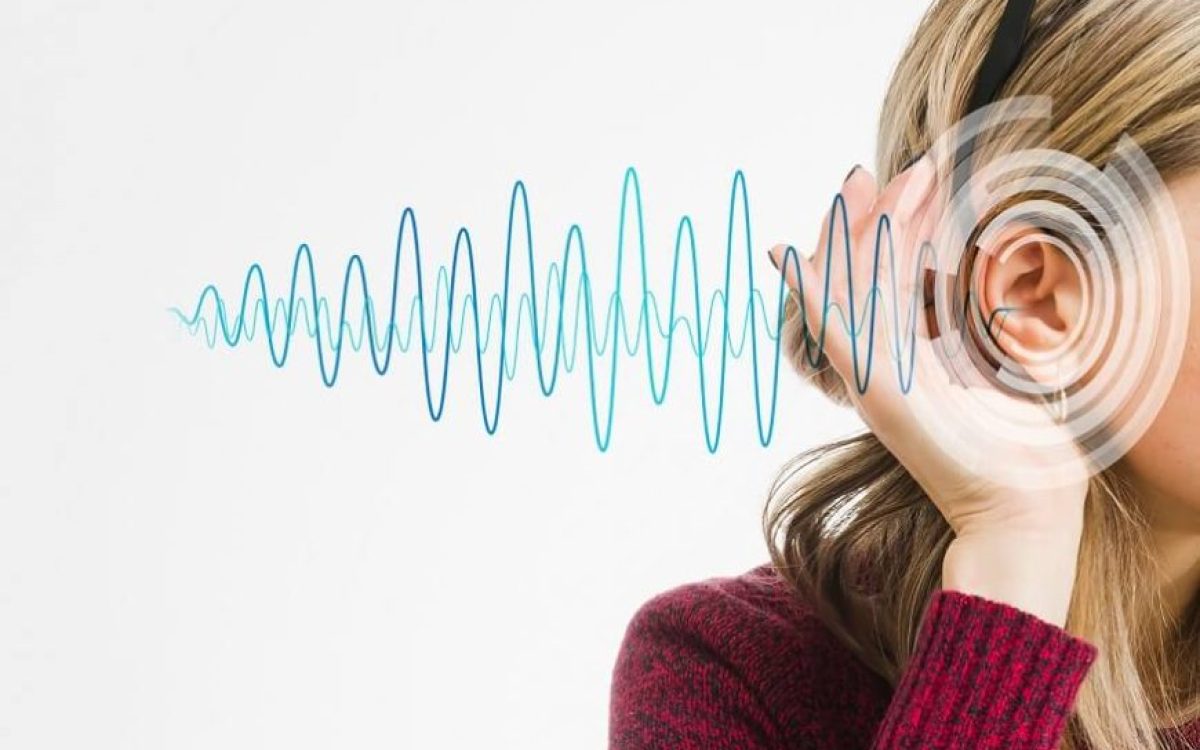
Discover how sound travels through air, water, and solids. A beginner-friendly explanation of sound waves, vibration, frequency, and energy movement — explained in a simple way.
How Does Sound Travel? A Clear Explanation for Beginners
Sound is everywhere — in music, in your voice, in the wind, in the city, and even in the quiet moments when it seems like nothing is happening. But one of the most common questions people ask is simple: How does sound actually travel? What makes it move? And why do we hear it differently in different places?
Whether you’re curious, studying, or simply exploring how the physical world works (and how it connects to deeper aspects of energy and vibration), this guide gives you the clearest explanation possible.
Let’s begin with the foundation of everything: vibration.
1. What Sound Really Is: Vibration Made Visible
Sound begins with vibration. Whenever an object vibrates — a guitar string, a person’s vocal cords, or a speaker — it pushes the particles around it. These particles bump into the next particles, which bump into the next ones, and so on.
This chain reaction produces sound waves.
Simple Definition:
Sound is a vibration that travels through a medium (air, water, solid) in the form of waves.
These waves carry energy, not matter. The air itself doesn’t travel from the speaker to your ears — the vibration does.
2. How Sound Waves Move Through Air
Air is the most common medium for sound, so let’s start there.
Air is made of countless tiny particles (oxygen, nitrogen, etc.). These particles are constantly moving and colliding.
When a sound source vibrates:
It compresses the air particles (pushing them close together).
Then it rarefies them (pulling them apart).
These alternating zones form a longitudinal wave — the type of wave sound uses.
Why it’s called a “longitudinal wave”
Because the particles vibrate in the same direction the wave moves.
Imagine dominoes falling in one line — that’s how sound travels in air.
3. How Sound Travels Through Water (and Why It’s Faster)
Sound travels about 4 times faster in water than in air.
Why?
Because water particles are closer together, so the vibrations move more efficiently.
If you place your head underwater in a pool, you may hear distant noises more clearly or feel deep vibrations. Marine animals communicate over huge distances for this reason.
4. How Sound Travels Through Solids (the Fastest Medium)
Sound travels fastest in solids — roughly 15–20 times faster than in air.
Why?
Solids have particles packed extremely close, forming strong bonds. Vibrations move through them with almost no loss.
Examples:
Placing your ear on a train track to hear an approaching train sooner
Feeling music vibration through the floor
Tapping a wall and hearing structure-borne sound on the other side
5. Why Sound Needs a Medium (and Cannot Travel in Space)
One of the most fascinating facts about sound is that it cannot travel in a vacuum.
In space, sound does not exist.
There are no air particles to vibrate, so no chain reaction of energy occurs. This is why astronauts communicate through radios, not through voice outside their suits.
6. Understanding Frequency: Why Sounds Are High or Low
Frequency is the number of vibrations per second, measured in Hertz (Hz).
High frequency = high-pitched sound (like a flute or whistle)
Low frequency = deep sound (like thunder or a bass drum)
Humans typically hear between 20 Hz and 20,000 Hz.
Animals and frequency
Dogs hear higher frequencies than humans
Elephants communicate with infrasound (extremely low frequencies) that travel miles
Dolphins and whales use high-frequency echolocation
7. Amplitude: Why Some Sounds Are Loud and Others Are Soft
Amplitude is the height of the sound wave.
Large amplitude = loud sound
Small amplitude = soft sound
Amplitude is directly connected to energy. More energy = louder sound.
This is why hitting a drum softly produces a quiet wave, while hitting it hard produces a strong, loud one.
8. Why Sound Changes Depending on the Environment
Sound interacts with the environment in several ways:
Reflection
Sound bounces off surfaces (echo in a cave).
Absorption
Soft materials like carpets and curtains absorb sound.
Diffraction
Sound waves bend around obstacles.
Refraction
Sound changes direction when moving through air of different temperatures.
Example:
Sound travels faster in warm air than in cold air.
9. The Human Ear: How We Decode Traveling Sound
Your ear translates vibration into meaning.
Sound waves enter the ear canal.
They vibrate the eardrum.
This moves the tiny bones of the middle ear (hammer, anvil, stirrup).
Vibrations enter the cochlea, filled with fluid and hair cells.
Hair cells convert vibration into electrical signals.
The brain interprets these signals as sound.
It’s a highly advanced biological system — far more precise than any microphone.
10. The Spiritual Angle: Sound as Energy and Vibration
Even though these articles are science-based for SEO, you can naturally bridge sound to spirituality here without forcing it.
Every spiritual tradition acknowledges sound as vibration.
Examples:
“Om” in Hinduism represents the primordial vibration of the universe.
Gregorian chants use resonance for altered states of consciousness.
Tibetan singing bowls use harmonic frequencies for emotional balancing.
Sound healing therapy aligns with concepts of frequency and energetic fields.
This is where science and spirituality meet:
Everything is vibration — sound simply makes this visible.
You can later internally link to articles about:
Energy healing
Frequencies and chakras
Sound baths
Meditation techniques
Spiritual resonance
11. Real-Life Examples of How Sound Travels
Music
When speakers vibrate, they push air waves that reach your ears.
Thunder
Lightning heats air rapidly → air expands → creates shockwaves.
Talking
Vocal cords vibrate and shape sound through the throat, mouth, and nose.
Instruments
Each instrument vibrates in its unique pattern, producing different timbres.
12. Summary: How Sound Travels in One Simple Sentence
Sound travels as vibrations that move through air, water, or solids by pushing particles in waves that carry energy from one place to another.